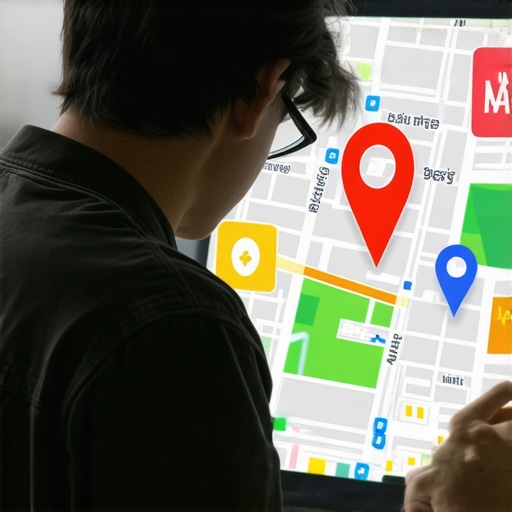
The Truth About Maps Embeds and Why They Often Fail to Move Your Pin
You’ve seen the advertisements on freelance marketplaces and SEO forums: “10,000 Google Map Embeds for $10!” or “Secret Map Stacking Strategy to Rank #1 Overnight!” For many small business owners and even some seasoned marketers, these offers look like a shortcut to the top of the local pack. If you are struggling with your google business profile seo, the idea of a “magic button” that forces your pin to the top is incredibly alluring. However, the reality of 2026 local SEO is far more nuanced, and the “embed blast” strategy is often a fast track to nowhere.
As a specialist in google business profile optimization, I have spent the last two years analyzing thousands of map pins. I’ve seen businesses invest heavily in these automated services only to find their rankings stagnant or, worse, declining. The frustration is palpable. You follow the “guru” advice, you buy the embeds, and yet, when you check your google maps rank tracker, your business is still buried on page three. Why is there such a massive disconnect between the theory of map embeds and the actual results? To understand this, we need to pull back the curtain on how Google actually treats embedded content and why the old-school “more is better” approach is fundamentally broken.
Before we dive into the technicalities, it is essential to establish a baseline: Google’s algorithm is smarter than it has ever been. In 2026, the engine doesn’t just count the number of times your map appears on the web; it evaluates the context, the authority, and the user experience associated with those embeds. If you want to create a winning local SEO plan with effective map strategies, you must move beyond the “blast” mentality and embrace a strategy rooted in relevance and technical efficiency.
Section 1: What Exactly is a Google Map Embed?
At its core, a Google Map embed is a piece of HTML code – specifically an <iframe> – provided by Google Maps to allow website owners to display a functional map on their site. This code allows users to zoom in, look at satellite views, and even get directions without ever leaving your webpage. From a technical standpoint, an iframe is essentially a “window” into another website. When a user loads your page, their browser makes a request to Google’s servers to fetch the map data and display it within that window.
Google provides this tool with a very specific intent: to improve the user experience. They want it to be easy for customers to find your physical location, see your storefront, and interact with your business details. However, many in the SEO world have misinterpreted this utility as a ranking signal. They believe that by placing this iframe on thousands of different websites, they are creating “backlinks” or “citations” that tell Google the business is important. This is a fundamental misunderstanding of google business profile seo.
An iframe is not a standard hyperlink. It does not pass “link juice” or authority in the same way a traditional anchor text link does. While it does create a digital connection between your GMB profile and a third-party website, Google treats these connections with a high degree of skepticism if they aren’t backed by high-quality content. In the eyes of a search engine, an embed is a utility for the user, not a vote of confidence for the business’s search ranking. If you are looking for a gmb ranking service, you must ensure they understand this distinction, or you risk wasting your budget on empty signals.
Section 2: Why the “Embed Blast” Strategy Often Fails
The “Embed Blast” or “Map Stacking” strategy typically involves taking your GMB map code and programmatically posting it to hundreds or thousands of low-quality “Web 2.0” sites. These are often automated blogs on platforms like Blogger, WordPress.com, or Tumblr that have no traffic, no unique content, and no local relevance. Here is why this strategy fails to rank google business profile effectively:
1. The Lack of Relevance
Google’s “Proximity, Relevance, and Prominence” framework is the bedrock of local search. If you embed your map on a blog about “Global Cryptocurrency Trends” but you are a plumber in Des Moines, there is zero topical or geographical relevance. Google’s AI models are now incredibly adept at identifying these “neighborhoods” of content. When it sees your map surrounded by gibberish or unrelated topics on a site with no authority, it simply ignores the signal. It sees it as noise, not a ranking factor.
2. The Proximity Filter and Spam Detection
Google uses sophisticated filters to weed out artificial ranking signals. If a business suddenly gains 5,000 map embeds overnight from domains registered in different countries, it triggers a red flag. Real-world business growth doesn’t happen that way. Google prioritizes real-world engagement over artificial iframe signals. If these embeds aren’t resulting in clicks, direction requests, or actual user interaction, they are effectively invisible to the ranking algorithm.
3. Insights from the Field
In my 2 years of experience as a local SEO expert, I’ve seen that Google prioritizes real-world engagement over artificial iframe signals. I have audited dozens of profiles that underwent “map stacking” only to find that the google maps ranking service they hired actually did more harm than good by cluttering their digital footprint with low-quality associations. The Moz community consensus mirrors this: embeds alone rarely “move the needle” in rankings. They serve more as a user experience (UX) and trust signal than a raw power boost. If you find yourself stuck, it might be time to stop wasting time on map ranking tasks that Google simply ignores.
4. The Problem with Web 2.0 Context
“Web 2.0 Map Embeds” are only useful if they are surrounded by localized, keyword-rich content. Most automated services fail here; they just drop the iframe into a blank page. Without a local NAP (Name, Address, Phone Number), a description of the service area, and mentions of local landmarks, the embed has no “anchor” to the physical world. It becomes a floating piece of code with no geographic weight.
Section 3: The Hidden Cost, Page Speed and Core Web Vitals
One of the most overlooked aspects of map embeds is their technical impact on your own website. While you might think adding a map to every page of your site helps your google business profile ranking, you could be inadvertently sabotaging your SEO through technical bloat.
The 14% Page Speed Penalty
Data research indicates that embedding a standard Google Map can result in a 14% drain on page speed scores. Google Maps is “heavy.” It requires multiple JavaScript requests to load the interactive elements, the tiles, and the business data. On a mobile device – where the majority of local searches happen – this delay can be the difference between a lead and a bounce.
Core Web Vitals (CWV) and Ranking
Google has made Core Web Vitals a significant part of its ranking algorithm. Heavy iFrames negatively impact metrics like Largest Contentful Paint (LCP) and Cumulative Layout Shift (CLS). If your map takes too long to load or causes the page content to “jump” as it initializes, your overall site authority drops. Slow-loading maps can actually hurt your google business profile ranking by increasing bounce rates. If a customer clicks your site from the map pack and it takes five seconds to load the contact page because of a heavy map embed, they will hit the back button. That “short click” tells Google your result wasn’t helpful, which can lead to a drop in your map position.
When using local seo tools to audit your performance, pay close attention to the “Total Blocking Time” and “JavaScript Execution Time.” If your map embed is the primary culprit, you may need to consider “lazy loading” the map or using a static image that links to Google Maps instead. This preserves your google maps lead generation potential without sacrificing the technical health of your site.
Section 4: When Map Embeds Actually Work (The 2026 Strategy)
Does this mean map embeds are useless? Absolutely not. It means the application must change. To rank higher on google maps in 2026, you need a strategy focused on quality and context rather than quantity.
1. Contextual and Hyperlocal Embedding
Instead of 1,000 random embeds, focus on 5-10 high-quality placements. A map embed works best when it is placed on a page specifically designed to serve a local audience. For example, if you have a “Service Area” page for a specific suburb, embed the map there. But don’t just drop the code; surround the map with unique, localized text. Mention local parks, historic buildings, or nearby intersections. This provides the “geographical proof” Google needs to associate your business with that specific micro-location.
2. The “Contact Us” Authority
Every business should have a map embed on their Contact page. This is a standard trust signal. It confirms to Google that your physical address matches the data on your GMB profile. This consistency is a core part of google business profile optimization. If you are struggling to set this up correctly, seeking a professional google maps ranking service can ensure your technical implementation is flawless and your NAP data is perfectly synced.
3. Leveraging Local Partners
A map embed on a local chamber of commerce site, a local news feature, or a neighborhood blog is worth more than 10,000 Web 2.0 embeds. Why? Because these sites have “Local Authority.” When Google sees your map on a site that is already recognized as a pillar of your specific community, the relevance signal is amplified exponentially. If you want to know more about why generic pages fail, read our guide on why your service area pages fail to signal authority to Google Maps.
4. Quality Over Quantity in Web 2.0s
If you do use Web 2.0 platforms, treat them like real blogs. Write a 500-word article about a local event or a common problem your business solves in that city. Embed the map within that article. This creates a “localized entity” that Google can index and attribute to your business. This is the only way to make google maps seo work through third-party platforms.
Section 5: Beyond Embeds, What Actually Moves the Pin?
If map embeds aren’t the “silver bullet,” what is? To truly rank google business profile assets in competitive markets, you must focus on the signals Google values most in 2026.
- Review Velocity and Sentiment: Google looks at how often you get reviews and what people are saying. Are they mentioning your services and your city? This is a massive ranking factor.
- NAP Consistency: Your Name, Address, and Phone number must be identical across the web. Discrepancies create “friction” in Google’s data, leading to lower rankings.
- High-Quality Local Citations: These are mentions of your business on reputable directories like Yelp, Yellow Pages, and industry-specific sites (e.g., Avvo for lawyers or Houzz for contractors).
- User Engagement Signals: How many people click “Call,” “Directions,” or “Website” from your profile? Google tracks these interactions as the ultimate proof of your business’s relevance.
Instead of spending weeks on map embeds, focus on “Map Ranking Tasks” that involve real user interaction. This includes responding to every review, posting weekly updates to your GMB feed, and adding high-quality photos of your work. These are the 4 map ranking tasks that actually move the needle in crowded markets. If you want to monitor your progress effectively, use a dedicated google maps rank tracker to see how these real-world actions influence your local grid visibility over time.
Conclusion
The “Truth About Maps Embeds” is that they are a small piece of a much larger puzzle. While they are a standard component of google business profile seo, they should never be your entire strategy. Relying on “embed blasts” is a relic of 2015 SEO that has no place in a modern digital marketing plan. In 2026, Google rewards businesses that provide real value, maintain technical excellence, and foster genuine local relevance.
Don’t let your ranking stagnate because of outdated tactics. Focus on building a robust, multi-faceted google maps seo strategy that prioritizes the user experience and technical performance. If you’re unsure where you stand, use SEO Viper Tools to audit your profile and track your real-world progress. Remember, moving the pin isn’t about tricking the algorithm – it’s about proving to Google that you are the most relevant and trusted choice for your local customers.