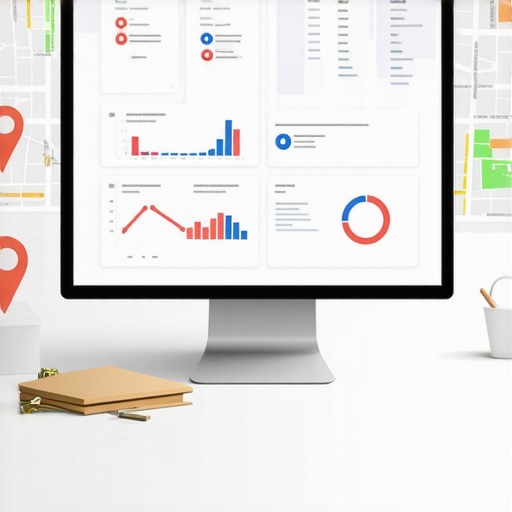
5 Local Directory Tactics That Actually Improved Our Profile Impressions
If you have been watching your google business profile seo metrics lately, you have likely felt the sting of stagnant impressions. You have optimized your description, uploaded high-resolution photos, and perhaps even posted weekly updates, yet your reach remains flat. As a specialist who has managed hundreds of profiles in hyper-competitive service-area markets, I have seen this plateau time and again. The reality of the 2025 and 2026 local search landscape is that “standard” citation building – the kind where you blast your NAP (Name, Address, Phone) to 50 random directories – is effectively dead. To move the needle today, you need a strategy that prioritizes entity validation and categorical relevance. According to Google Support research, businesses with complete, accurate, and frequently updated information across the web are significantly more likely to show up in local results. In this guide, I’m sharing the five specific directory tactics that actually forced our impressions to climb when nothing else would.
Why Traditional Citation Building is Failing Your Google Business Profile SEO
For years, the local SEO playbook was simple: more citations equals more trust. However, Google’s algorithm has evolved from a simple matching engine into a sophisticated entity-recognition system. Today, the “quantity” of citations is a secondary metric at best. What Google prioritizes now is prominence and relevance. If your business is listed on 100 low-quality link farms that have no topical authority, Google views that as noise, not a signal of authority.
The core problem is that many business owners treat directory listings as a “set it and forget it” task. They fail to realize that inconsistent data across the web creates a “trust gap.” When Google’s crawlers find conflicting information – even something as minor as “Street” vs. “St.” – it reduces the confidence the algorithm has in your location data. This lack of confidence directly translates to lower visibility in the local map pack. This is often why most local directory SEO strategies fail to move the needle on phone calls; the phone doesn’t ring if the profile isn’t being shown to the right users at the right time. In the modern era of google business profile seo, NAP consistency is merely the baseline; the real growth comes from how you leverage those listings to build a cohesive digital footprint.
Tactic 1: Prioritizing Niche-Specific & Hyper-Local Directories
If you want to rank higher on google maps, you must stop treating all directories as equal. A listing on a general directory like Yellow Pages is far less valuable than a listing on a niche-specific platform. For example, if you are a contractor, a profile on Houzz or Angie’s List carries ten times the weight of a generic business listing because it provides Google with categorical context. Similarly, lawyers should focus on Avvo or Justia.
Our internal research into the “Top 10 Must-Use Local Directories for 2025” shows a massive shift toward “Niche Citations.” These platforms act as a signal to Google that you are an authority within a specific industry. Furthermore, hyper-local directories – such as your local Chamber of Commerce or a neighborhood-specific blog – provide the proximity signals that are essential for dominating the local pack. To identify these high-impact opportunities, we recommend using advanced local seo tools that can scrape the citation profiles of your top-ranking competitors. By identifying where the leaders in your industry are listed, you can close the “citation gap” and signal to Google that your business belongs in the same conversation.
- Action Step: Search for “[Your Industry] + Directory” and “[Your City] + Business Directory.”
- Action Step: Focus on directories that require manual verification, as these carry more weight than auto-approved sites.
- Action Step: Ensure your category selection on these sites perfectly matches your primary category on your Google Business Profile.
Tactic 2: The “Ghost” Listing Audit & Citation Cleanup
One of the most overlooked google business profile seo factors is the presence of “ghost” listings. These are duplicate or outdated profiles that exist from previous business names, old addresses, or former phone numbers. These ghost listings are toxic to your rankings because they dilute your proximity signals. When Google sees three different addresses for the same business name, it doesn’t know which one to trust, so it simply stops showing your profile in the map pack for those areas.
If you have noticed a sudden drop in visibility, you need to learn how to fix Google Business Profile impressions when they suddenly flatline. Often, the culprit is a newly discovered duplicate listing that has confused the algorithm. We use a specialized google business profile seo audit process to hunt down these duplicates. You should search for every variation of your business name and previous phone numbers. Once found, you must go through the painstaking process of claiming and merging these listings or requesting their deletion. This cleanup process restores the “trust flow” to your primary profile, often resulting in a rapid recovery of impressions.
Tactic 3: Strategic Geo-Tagging in Directory Descriptions
Most business owners copy and paste the same generic “About Us” section into every directory. This is a missed opportunity for geo-relevance. To rank higher on google maps, your directory descriptions should be optimized with neighborhood-level keywords and local landmarks. Instead of saying “We serve the Greater Chicago area,” say “We provide HVAC services near Wrigley Field and throughout the Lakeview and Lincoln Park neighborhoods.”
This approach helps Google associate your business entity with specific geographic coordinates. It is a technique often used when leveraging the 4 hidden citations that actually boost local directory SEO. By weaving in local identifiers, you are providing the algorithm with more “hooks” to pull your profile into the search results when a user is nearby. However, be careful to avoid keyword stuffing; the descriptions must still read naturally to a human user. Use these descriptions to highlight your specific service areas, which reinforces the “Service Area Business” (SAB) settings you have configured in your GBP dashboard.
Tactic 4: Leveraging Third-Party Reviews for Proximity Growth
Google does not operate in a vacuum. Its ranking algorithm for the local pack considers the “reputation ecosystem” of your business across the entire web. While Google reviews are the most important, having a steady stream of positive sentiment on third-party sites like Yelp, BBB, or Trustpilot is one of the key google map pack ranking factors. If you have 500 reviews on Google but zero everywhere else, it looks unnatural to the algorithm.
A diverse review profile signals that your business is a prominent member of the local community. More importantly, Google often scrapes review content from these third-party sites to display “Review Snippets” in the search results. If a customer mentions a specific neighborhood or service in a Yelp review, that keyword can actually help your Google Business Profile show up for related searches. Encourage your customers to leave feedback on different platforms to build a well-rounded digital reputation. This holistic approach to reputation management is a core component of any modern google business profile seo strategy.
Tactic 5: Directory Backlinking, The Missing Link in Local SEO
The final tactic that most SEOs miss is treating directory profiles as “tier 1” assets. Most people create a listing and then never think about it again. However, if you want that listing to pass maximum authority to your Google Business Profile, you need to build its own authority. We recommend linking to your most important directory profiles (like your Yelp or BBB page) from your website’s footer or your social media profiles.
By creating this internal and external linking structure, you are telling Google that these profiles are important. This is a strategy we detail in our guide on 8 citation sources that actually move the needle on your maps checklist. When your directory profiles have their own backlinks, they become more “crawlable” and their data carries more weight in the local ranking algorithm. It’s about creating a web of high-authority mentions that all point back to your core business entity.
Measuring Success: Beyond Vanity Metrics
Impressions are a great leading indicator, but they don’t tell the whole story. To truly understand if these directory tactics are working, you need to use a google maps rank tracker. A quality rank tracker will show you a geo-grid of your rankings, allowing you to see exactly how your “proximity bubble” is expanding. As you implement niche citations and clean up ghost listings, you should see your business ranking in the top 3 spots across a wider geographic area. This data-driven approach allows you to pivot your strategy and focus on the neighborhoods where you are still struggling to gain traction.
Conclusion & Action Plan
Improving your google business profile seo is no longer about doing more; it is about doing better. By prioritizing niche-specific directories, cleaning up duplicate “ghost” listings, geo-tagging your descriptions, diversifying your review profile, and building authority to your citations, you create a robust foundation for local dominance. Stop chasing a high volume of low-quality listings and start chasing relevance and prominence. If you are ready to take your local strategy to the next level, I invite you to check out our comprehensive guide on Creating a Winning Local SEO Plan with Effective Map Strategies. The local pack is more competitive than ever, but with these five tactics, you can force the impressions you need to grow your business.