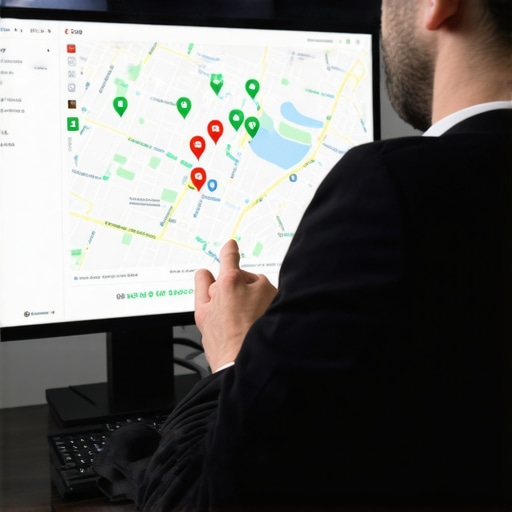
How to Force Your Business Profile into the Map Pack Without Spamming Citations
If you’ve been in the local search game for more than five minutes, you’ve heard the same tired advice: “Build more citations.” The gurus tell you that if you just submit your business to another 50 obscure directories, your pin will magically jump to the top of the local map pack. But here’s the reality in 2026: you’ve built the citations, you’ve cleaned up your NAP (Name, Address, Phone number), and your rankings are still stuck on page two. You are suffering from the “Citation Trap.”
The truth is that google business profile seo has evolved far beyond static directory listings. Google’s algorithm has become incredibly sophisticated at identifying real-world relevance versus manufactured prominence. I’ve seen small “mom-and-pop” shops with zero backlink profiles and no website outrank massive national franchises simply because they mastered the art of “forcing” their profile into the local pack through behavioral signals and technical relevance. In this deep-dive, I’m going to show you how to stop wasting time on citation spam and start using the technical levers that actually move the needle.
Section 1: The Citation Trap and the 2026 Reality
For years, citations were the backbone of local SEO. The logic was simple: the more times Google saw your business information across the web, the more it trusted you. However, as AI-driven search filters have become the norm, Google has realized that citations are the easiest signal to manipulate. Today, a high volume of low-quality citations can actually act as a “noise” filter, making it harder for Google to identify your true service area.
Recent research shared across SEO communities like Reddit has highlighted a frustrating phenomenon: competitors with inferior websites – or sometimes no website at all – are dominating the map pack. Why? Because they have proximity and real-world engagement on their side. google business profile seo is no longer a game of “who has the most mentions”; it’s a game of “who does Google believe is most likely to satisfy the user’s immediate intent.” If your strategy is still focused on hitting a specific number of directory listings, you are playing a 2015 game in a 2026 world.
To break out of this trap, we have to look at the three core pillars of local ranking and understand which ones we can actually “force” through technical optimization and behavioral engineering.
Section 2: The Three Pillars of “Forcing” a Rank
According to Google’s official documentation, local results are based primarily on three factors: Relevance, Proximity, and Prominence. To rank in the local map pack seo, you must satisfy all three, but the way you approach them determines your success.
- Relevance: This is how well a Business Profile matches what someone is searching for. Google states: “Relevance is how well a local Business Profile matches what someone is searching for.” If a user searches for “emergency water heater repair” and your profile only says “Plumber,” you lack relevance.
- Proximity: This is the distance of each potential search result from the location term used in a search. This is the hardest pillar to “force” because you can’t physically move your office every time someone searches from a different ZIP code.
- Prominence: This refers to how well-known a business is. This is calculated based on information Google has about a business from across the web (links, articles, directories) and, more importantly, user behavior.
While you can’t change your physical location, you can “force” Relevance and Prominence to such a degree that Google is willing to expand your Proximity radius. This is the secret to appearing in searches five, ten, or even fifteen miles away from your physical office. When you maximize these factors, you effectively tell the algorithm that your business is so relevant and so prominent that it is worth showing to the user, even if there is a closer competitor.
Section 3: Forcing Relevance through Technical Optimization
If you want to rank google business profile results at the top of the stack, you have to start with technical relevance. Most business owners set their primary category and call it a day. That is a massive mistake. To force relevance, you need to use every available field in the GBP dashboard as a keyword signal.
Primary vs. Secondary Categories
Your primary category is the single most important ranking factor on your profile. However, over-categorizing with ten secondary categories can dilute your authority. Choose 2-3 highly specific secondary categories that reflect your actual services. For example, if you are a Personal Injury Lawyer, don’t just add “Lawyer” as a secondary. Add “Trial Attorney” or “Legal Services” only if they directly support your primary goal. Using a google business profile audit tool can help you see exactly which categories your top-ranking competitors are using so you can match their relevance profile.
The “Services” Menu: Your Hidden Keyword Goldmine
Google’s “Services” section is often ignored because it doesn’t always appear prominently on the front end of the profile. However, the text you put in the service descriptions is indexed. This is where you should perform google business profile optimization by adding long-tail keywords. Instead of just listing “Roof Repair,” write a 300-word description of your roof repair process, mentioning specific materials, common local issues (like hail damage in your city), and your emergency response time.
For more on identifying these technical gaps, see our guide: “Why Your Local SEO Audit Is Likely Missing the Real Reason Your Pin Won’t Move.”
Section 4: Forcing Proximity (The Neighborhood Strategy)
The “Proximity Wall” is the biggest hurdle in local SEO. Google wants to show the closest result to the user. To break through this wall and rank in google map pack results for neighboring areas, you need a Hyperlocal Content Strategy.
Hyperlocal Service Area Pages
You cannot just list ZIP codes on your website and expect to rank. You need dedicated pages for every major neighborhood or suburb you serve. These pages should include:
- Specific mentions of local landmarks and intersections.
- Embedded Google Maps showing the route from that neighborhood to your office.
- Customer reviews specifically from residents of that neighborhood.
- Photos of work completed in that specific ZIP code.
When Google’s “Googlebot” crawls these pages and sees them linked to your GBP, it begins to associate your business with those specific geographic coordinates. This is how you “force” your pin to show up in a search performed three neighborhoods away. For a step-by-step breakdown of this, read “The Service Area Page Strategy for Dominating Neighborhoods You Don’t Live In.”
Additionally, consistent execution of “3 Map Ranking Tasks That Actually Force Your Pin into Surrounding ZIP Codes” will ensure that your proximity growth is sustainable and not just a temporary spike.
Section 5: Forcing Prominence with Real-World Engagement
Prominence is no longer just about how many backlinks your website has. In the age of mobile search, Prominence is measured by behavioral signals. Google tracks how users interact with your profile. If 100 people search for “dentist near me” and 80 of them click on the 3rd result because it has better photos and more “Direction Requests,” Google will eventually move that 3rd result to the #1 spot.
Driving “Direction Requests” and “Click-to-Calls”
These are the ultimate trust signals. When a user clicks “Directions” to your business, Google gets a GPS-verified signal that a real human is actually traveling to your location. This is a massive “Prominence” booster. You can encourage this by:
- Running “Local Actions” ads that specifically target direction requests.
- Adding “Check-in” offers for customers who visit your physical location.
- Using local seo software to track which photos or posts are driving the most clicks and doubling down on that content.
The Power of Geo-Tagged Photos
To rank higher on google maps, you need to upload high-quality photos regularly. While Google officially strips EXIF data (metadata) from photos, their Cloud Vision AI can still identify the contents of the photo and the likely location based on landmarks in the background. Uploading a photo of a job site in a specific neighborhood tells Google exactly where your business is active. This is a core component of “How Real-World Map Engagement Tactics Actually Force Proximity Growth.”
Monitoring these metrics requires professional-grade gmb seo tools or a google maps rank tracker to ensure that your engagement efforts are translating into actual grid-rank improvements across your entire city.
Section 6: The 2026 Pivot: Beating AI Search Filters
As we move deeper into 2026, Google’s AI Overviews (formerly SGE) are increasingly filtering out businesses that don’t have strong “Trust Signals.” AI search isn’t just looking for keywords; it’s looking for entities it can trust. This means your GBP needs to be part of a larger ecosystem of authority.
To beat these filters, you must ensure your profile isn’t “ghosting” customers. This means responding to 100% of reviews (both positive and negative) within 24 hours, keeping your Q&A section updated with helpful answers, and maintaining a consistent posting schedule. If your profile looks abandoned, the AI will skip over you in favor of a more “active” entity. For a deep dive into these requirements, see “The Specific Trust Signals Your Google Business Profile Needs to Stop Ghosting Customers.”
Section 7: Conclusion & Call to Action
Forcing your business into the map pack isn’t about finding a magic “hack” or buying a thousand spammy citations. It’s about technical precision and engineering real-world engagement. You have to tell Google – through your categories, your service descriptions, your service area pages, and your user interactions – that you are the most relevant and prominent choice in your market.
Stop wasting your marketing budget on outdated directory services. If you want to see real movement on your map pin, you need a gmb ranking service that understands the nuances of behavioral SEO and technical relevance. The marathon of engagement is what wins the local search race. Start forcing your rank today by focusing on the signals that actually matter to the algorithm.
Kevin Pauls is a Local SEO Consultant and Google Business Profile Product Expert who engineers high-visibility map strategies for competitive niches.