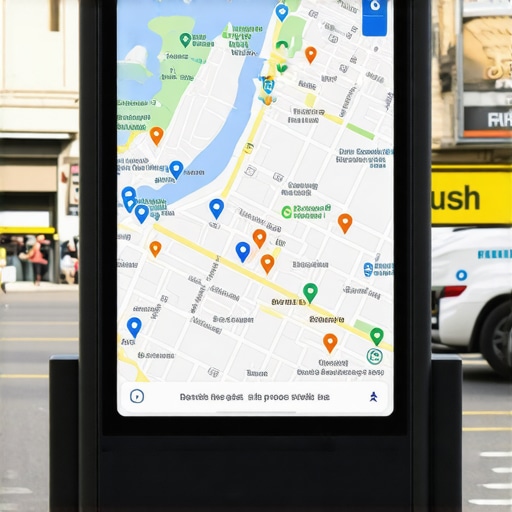
Why Most Chiropractors Never Show Up in the Local Map Pack
You’ve spent years mastering the art of the adjustment. Your clinic is pristine, your staff is world-class, and your patients leave feeling like new people. Yet, when you search for a “chiropractor near me” in your own city, your practice is nowhere to be found. You are essentially a “Ghost Clinic” – a high-quality practice that is invisible to the very people searching for your help.
The reality of modern patient acquisition is stark: the Google Local Map Pack (the “Top 3” results) captures the vast majority of local clicks. If you aren’t in those top three spots, you are effectively ceding your market share to competitors who may not even provide the same level of care you do. Most chiropractors are buried on page 2 or 3, wondering why their phone isn’t ringing despite having a website and a Google Business Profile (GBP).
As a marketing consultant, I’ve seen this time and again. When I help people get set up with their marketing strategies, I firmly believe in giving “full circle” marketing solutions. I’ve seen consultants stop halfway – they might fix your NAP consistency but ignore your website authority, or optimize your categories but forget about real-world engagement. Ranking in the Map Pack isn’t about luck; it’s a technical and strategic battle. This guide will break down exactly why most local seo for chiropractors fails and how to fix it using a comprehensive, full-circle approach.
Section 1: The Proximity Problem & The “Two-Mile” Filter
One of the most frustrating aspects of local search optimization is the proximity filter. Google’s primary goal is to provide the most relevant, local result to the user. This sounds logical, but for a chiropractor, it often creates a “geographic bubble.” Research from DCRank highlights that proximity is one of the most powerful local seo ranking factors, often filtering out clinics that are just a few miles away if a closer option exists – even if that closer option has worse reviews.
Many chiropractors suffer from what we call the “Two-Mile Filter.” If your office is located in a dense urban area or a highly competitive suburb, Google may only show your practice to users within a very tight radius. If you aren’t actively working to expand your “geographic relevance,” you will stay trapped. This is where many practitioners realize they need a professional google maps ranking service to signal to Google that their authority extends beyond their immediate street corner.
To combat proximity issues, you must understand that rankings are relative. You aren’t just ranking against “the algorithm”; you are ranking against every other DC in a five-to-ten-mile radius. If your competitors are utilizing hyperlocal seo tactics and you aren’t, Google will view them as more relevant to the neighborhood. This is why Why Most Local Map Ranking Strategies Fall Flat in High-Competition Areas – they fail to account for the density of competition and the need for stronger proximity signals.
Section 2: The Website-Map Connection (The “Halfway” Mistake)
A common myth in the industry is that your Google Business Profile and your website are two separate entities. This is the ultimate “halfway” mistake. In my “Full Circle” philosophy, your website is the foundation upon which your Map Pack ranking is built. If your website is weak, your GBP will never reach its full potential.
Google’s algorithm uses your website to verify the information on your GBP. If you are trying to rank google business profile for terms like “sciatica treatment” or “sports injury chiropractor,” but your website only has a generic “Services” page with a bulleted list, you are failing the relevance test. Technical details matter. A weak website structure – such as one-page sites or missing dedicated service pages – is a leading cause of Map Pack failure.
For local seo services to be effective, you must have dedicated, high-quality pages for every condition you treat. You need a page for “Prenatal Chiropractic,” another for “Neck Pain Relief,” and another for “Decompression Therapy.” These pages provide the “Relevance” signal that the Map algorithm craves. Without this connection, your profile is just a floating island with no anchor. For a deeper dive into this, see our guide on Creating a Winning Local SEO Plan with Effective Map Strategies.
Section 3: Category & Service Optimization (The Technical Gaps)
Most chiropractors set up their GBP, select “Chiropractor” as their primary category, and think they are done. This is a massive missed opportunity in google business profile optimization. While “Chiropractor” should almost always be your primary category, the secondary categories are where you can gain a significant edge over the competition.
Depending on your practice’s focus, you should consider secondary categories like:
- Physical Therapy Clinic
- Wellness Center
- Massage Therapist
- Pain Management Physician
- Sports Medicine Clinic
Furthermore, many DCs ignore the “Services” menu within the GBP dashboard. This isn’t just for patients to read; it’s indexed by Google. You should use local seo tools to audit which keywords your top competitors are ranking for and ensure those specific services are listed in your profile with detailed descriptions. If you want to increase google business profile visibility, you must fill out every single field Google provides. Leaving the “from the business” description or the services list blank tells Google that you aren’t a fully-realized authority in your niche.
Section 4: The Review Gap – Velocity, Keywords, and Trust
We all know reviews are important, but most chiropractors focus on the wrong metrics. It’s not just about having a 4.9-star rating; it’s about “Review Velocity” and “Keywords in Reviews.” This is a critical component of google map pack ranking factors.
Review Velocity refers to how frequently you receive new reviews. If you got 50 reviews three years ago and nothing since, Google views your business as potentially stagnant or even closed. A consistent stream of fresh reviews signals that your clinic is active and trusted by the community. This is a core part of a modern google review strategy.
Perhaps even more important are the keywords within the reviews. Google’s AI scans review text to understand what you actually do. If a patient leaves a review saying, “Dr. Smith helped my lower back pain with a great adjustment,” Google associates your profile with those bolded terms. You should encourage patients to mention the specific condition they were treated for. This builds The Specific Trust Signals Your Google Business Profile Needs to Stop Ghosting Customers, making you the obvious choice for both the algorithm and the patient.
Section 5: Advanced 2026 Tactics – Real-World Engagement
As we move toward 2026, static optimization is no longer enough. Google is increasingly looking at “Engagement Signals” to determine who deserves to rank in google map pack results. These are real-world interactions that prove your business is a local hub.
What are these signals? They include:
- Driving Directions: How many people are actually clicking “Directions” to your clinic?
- Photo Views: Are people engaging with your office photos and staff headshots?
- Check-ins: Do people have their location services on when they enter your building?
- Click-Through Rate (CTR): When you show up in search, do people actually click your listing or skip to the next one?
You can use google maps seo tools to track these interactions and identify gaps. If you have high impressions but low clicks, your “Full Circle” strategy is failing at the visual or social proof stage. I often tell my clients that How Real-World Map Engagement Tactics Actually Force Proximity Growth is the “secret sauce” for 2026. If Google sees people traveling from the next town over to visit your clinic, it will naturally expand your ranking radius because you have proven your value to a wider audience.
Section 6: The 2026 Local SEO Checklist for Chiropractors
To ensure you aren’t stopping halfway, follow this “Full Circle” checklist to rank higher on google maps and dominate your local market:
- NAP Consistency: Ensure your Name, Address, and Phone number are identical across your website, GBP, and all local directories (Yelp, Healthgrades, etc.).
- High-Resolution Geo-Tagged Photos: Upload new photos of your clinic monthly. Use photos of the exterior, interior, and your team. Geo-tagging these images helps reinforce your location signals.
- Local Schema Markup: This is essential for 2026. Your website should use “Physician” or “LocalBusiness” Schema to tell search engines exactly where you are and what you do.
- Hyperlocal Content: Write blog posts about local events, high school sports teams you support, or health workshops in your city. This builds geo targeted seo authority.
- Execute Specific Tasks: Follow the 4 Map Ranking Tasks That Force Your Business Into the Local Pack to ensure no technical stone is left unturned.
- Strategic Planning: Always be Creating a Winning Local SEO Plan with Effective Map Strategies that evolves as Google’s algorithm changes.
Conclusion: Achieving Full Circle Dominance
Dominating the Local Map Pack is not a “set it and forget it” task. It requires a google business profile optimization strategy that integrates seamlessly with your website, your patient experience, and your local community presence. Most chiropractors fail because they look for a silver bullet – a single hack or a one-time optimization. But as I always say, you cannot stop halfway.
By addressing proximity filters, strengthening your website-to-map connection, optimizing your technical categories, and driving real-world engagement, you can move from being a “Ghost Clinic” to the most visible practice in your city. It’s time to stop letting your competitors take the patients who are looking for you. If you’re ready to see how your practice measures up, it’s time for a “Full Circle” audit. Utilize the right google maps ranking service and tools to claim your spot in the Top 3 and finally get more calls from google maps.