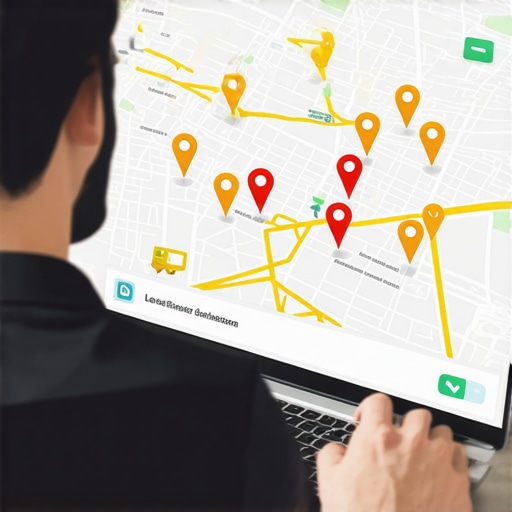
Standard enterprise crawlers and technical checklists are blind to physical space. They run scans for canonical tags, server response times, and crawling budgets, while the local business owner bleeds phone calls because of a coordinate drift or a localized algorithm filter. The real work of local ranking happens in a spatial layer that standard tools cannot calculate.
The day the centroid collapsed in a suburban office park
Local SEO audits fail because they use crawling tools built for global websites rather than analyzing physical coordinates, mobile distance metrics, and real-time behavioral signals. The map algorithm calculates proximity based on the physical distance between the user and your business location, rendering global backlink metrics useless on their own. To win in the Map Pack, you must auditing spatial relevance, address validation, and localized user signals directly.
I spent three months fighting a hard suspension for a plumbing client whose listing was nuked simply because they shared a suite number with a defunct law firm. Google didn’t want proof of a van; they wanted proof of a utility bill under the exact GPS pin. Standard technical crawlers found nothing wrong with the site. The links were clean. The structured data validated perfectly. Yet, the business was completely invisible in the real world. This is the gap where standard technical SEO audits go to die. They look at the code but ignore the dirt, the concrete, and the physical reality of the local centroid.
“Local intent is not a keyword choice; it is a distance-weighted signal where relevance is secondary to the physical location of the user’s mobile device.” – Map Search Fundamentals
The invisible coordinate grid that traditional crawlers cannot see
Traditional web crawlers are completely blind to spatial proximity and mobile-first coordinate clustering. They read code, check response codes, and catalog meta descriptions while ignoring how Google Maps tracks real-world coordinate pairs. While a typical technical report might highlight minor errors, it ignores why why standard seo tools fail at solving local proximity problems because those tools are not built to compute distance-weighted ranking algorithms. If your spatial coordinates do not match your structured data, you remain invisible.
Let us look at how the coordinate grid operates. Google calculates user proximity down to the millisecond. When a user searches for a service, the map engine creates a dynamic boundary around their exact location. If your physical address is filtered due to a shared centroid or if you are using why automated gmb tools often trigger profile suspensions, your profile disappears entirely. The crawler sees a pristine website. The maps engine sees a compliance violation. You need specialized workflows to measure actual local search performance rather than relying on automated global audits that miss real-world variables.
Why your physical address is a liability
A physical address can trigger immediate map pack suppression if it shares a location footprint with spam listings. Google relies heavily on address trust scores to filter out deceptive lead-generation operations that clutter local results. If your profile is flagging filters, you may need dedicated seo services to rebuild trust after spammy lead gen listings to salvage your brand equity. A simple address overlap can destroy years of natural organic growth.
Address spam filtering is aggressive. Google uses advanced machine learning models to detect artificial office rentals, virtual boxes, and shared suites that lack physical signage. When these filters trigger, your listing is suppressed or suspended. Standard technical audits do not flag address risks because they only evaluate website crawlability. To protect your brand, you must proactively clean up historical address issues and address consistency errors.
The math of proximity and how to recover from a ranking drop
Proximity ranking drops occur when Google adjusts the distance weight within a specific local vertical. These algorithm shifts shrink your effective service area radius, prioritizing immediate proximity over historical authority signals. If your business has experienced a sudden drop, deploying targeted local seo services to recover from proximity based ranking drop is critical to expanding your reach. You cannot rely on standard desktop ranking tools to measure these changes.
When proximity weights change, your visibility might drop from a five-mile radius to a one-mile radius. To fight this compression, your website must build strong hyper-local relevance. This is done by optimizing local landing pages, acquiring highly localized citations, and generating geographic content that proves you serve the outer edges of your market. This strategy counteracts the shrinking physical radius by maximizing your local relevancy scores.
Local Authority Reading List
- The Schema Strategy That Links Your Website to Your Map Pin
- Why Over-Optimized Anchor Text is the Silent Killer of Local Rank
- The Monitoring Strategy That Keeps Google Business Profiles Safe
- Why Your Technical Audit is Missing These Local Schema Errors
- The Agency Software Secret for Managing Multiple Local Profiles
How to handle broken redirects and 404 errors on local landing pages
Broken links and misconfigured redirects on your Google Business Profile website link will instantly suppress your map ranking. Google expects the primary URL on your profile to be highly crawlable, fast, and secure. If your local landing pages are throwing errors, utilizing seo services to fix broken redirects and 404 errors ensures that search engine crawlers can successfully pass authority to your map listing. A single broken redirect can sever the connection between your website and your map pin.
When a local page returns a 404 error, Google’s trust in the business location drops. The algorithm interprets a broken page as a sign of an inactive or closed business. This causes the Map Pack listing to lose its ranking to competitors with active, optimized landing pages. Regularly auditing your site for redirect loops and broken internal links is a fundamental part of maintaining map visibility.
Building a custom local toolkit to replace generic tools
Generic SEO toolkits fail because they do not track localized search grid positions across different zip codes. To accurately monitor local rankings, you must use grid-based tracking software that measures proximity from multiple coordinate points. Selecting the best toolkit to improve local search rankings allows you to see the real-world boundaries of your business footprint. Knowing your ranking from a single desktop location is no longer sufficient.
A modern local toolkit should measure coordinate rankings, review sentiment velocity, and coordinate consistency. By tracking rankings on a grid, you can see exactly where your visibility drops off. This data allows you to focus your local optimization efforts on specific neighborhoods where your competitors are gaining ground.
“Relevance is calculated dynamically at the moment of query. It uses real-time mobile GPS data, which means traditional static search indexes do not accurately represent what real users see.” – Spatial Search Research Group
The danger of keyword stuffed names and how to normalize rankings
Keyword stuffing your business name on Google Maps provides a temporary ranking boost but risks manual penalties. When you clean up your business name to comply with Google Guidelines, your rankings can temporarily fluctuate. Utilizing experienced local seo services to normalize rankings after keyword stuffed business name edit helps stabilize your traffic while building long-term authority. You do not need to cheat the system to win.
When you edit your business name to reflect your legal name, the algorithm re-evaluates your profile. To maintain your position without the stuffed keywords, you must strengthen other ranking factors. Focus on building high-quality, local backlinks, optimizing your website structured data, and earning natural reviews that mention your primary services.
Comparing specialized map tools with global SEO software
Global SEO software is built to measure domain authority and national keyword rankings, not local pack performance. Map optimization requires tracking dynamic proximity variables that global tools are not programmed to compute. Comparing a gmb ranking toolkit vs other local seo tools shows that specialized map tools provide the granular coordinate data needed to make informed local optimization decisions.
Specialized tools allow you to audit local-specific signals such as review velocity, photo uploads, and business attribute configurations. Global software treats your website as a single entity, whereas local tools treat your business as a physical storefront interacting with a specific neighborhood. Investing in map-focused technology is necessary for any business that relies on local customer acquisition.
Recovering your rank after a manual penalty
Recovering from a Google penalty requires a thorough cleanup of spammy backlinks, keyword-stuffed content, and manipulated listings. Google employs both automated filters and manual reviewers to police the local map ecosystem. If your business has been flagged, securing professional seo services to recover from google penalty is the most reliable way to restore your search engine visibility and protect your digital assets.
A manual penalty can occur if your website is caught using deceptive link building schemes or if your map profile has been flagged for fake reviews. The recovery process involves identifying the violations, removing the non-compliant elements, and submitting a detailed reinstatement request. Trust is hard to build but easy to lose, making compliance your most valuable asset.
For enterprise brands and local service businesses alike, the path forward requires a shift in perspective. Stop looking at your website as an isolated digital asset. Start looking at it as the foundational anchor for your physical location. When you align your website technical structure with your real-world coordinates, the map algorithm will finally reward your business with the visibility it deserves.