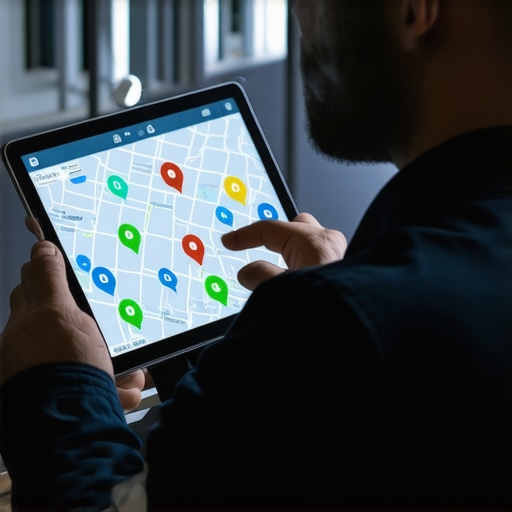
Why Your Pest Control Map Rank Tracker Is Lying About Your Real Phone Calls
You open your SEO reporting software, and it’s a sea of green. Your pest control company is sitting at #1 for “termite inspection” and “exterminator near me” across a 10-mile radius. By all accounts, you are dominating the local market. But then you look at your dispatch board, and it’s empty. The phones aren’t ringing, the lead forms aren’t coming in, and your ROI is flatlining. Welcome to the “Green Grid Illusion.”
I’m Lisa Weber. Over the last decade, I’ve worked with hundreds of service-based businesses, and I’ve seen this exact scenario play out more times than I can count. On average, I help pest control and lawn care businesses increase qualified leads by 20% by cutting through the noise of vanity metrics and focusing on what actually triggers a phone call. If your google maps rank tracker says you’re winning, but your bank account says you’re losing, it’s because those trackers are fundamentally disconnected from how a human being actually searches for help when a cockroach scuttles across their kitchen floor.
The Geo-Grid Mirage: How Trackers Sample Data vs. How Humans Search
To understand why your reports are lying, we have to look at the technology behind the curtain. Most local map pack seo tools operate using “geo-grid” technology. These tools use bots to simulate searches from specific GPS coordinates – latitude and longitude points – at fixed intervals. While this is helpful for a bird’s-eye view, it is a sterile, laboratory version of reality.
In the real world, Google’s algorithm is far more sophisticated than a simple coordinate check. When a bot performs a search, it has no search history, no cookies, no physical movement, and no “intent” signals. However, when a homeowner in a neighboring suburb searches for “wasp nest removal,” Google looks at their physical location, their past search behavior, and even the speed at which they are moving. If they are searching while driving toward your office, they see one thing; if they are sitting in their backyard, they see another.
Accuracy in tracking depends heavily on geo-grid technology precision and update frequency. Many business owners rely on weekly scans, but in the hyper-competitive pest control niche, rankings can fluctuate hourly based on competitor proximity and Google’s “Possum” filter. A bot search is static; a human search is dynamic. If your google business profile seo strategy is based solely on a weekly bot scan, you are essentially trying to navigate a hurricane using a map from 1995. You might see a “1” on your grid, but that doesn’t account for the “user intent” filters that Google applies to real people, which can often push your profile out of the top three in favor of a closer or more relevant competitor.
Why Your Google Maps Rank Tracker Data Doesn’t Match Real-World Calls is often the first question my clients ask, and the answer almost always lies in this gap between bot simulation and human behavior.
Proximity vs. Intent: The Gap That Kills Pest Control Leads
In 2026, proximity remains the king of local search, but “Intent” has become the kingmaker. Google’s primary goal is to provide the most relevant solution to the user’s immediate problem. For a pest control company, this means that “Proximity, Relevance, and Prominence” are weighted differently depending on the urgency of the search.
If a user searches for “emergency pest control,” Google prioritizes proximity and current “open” status above almost everything else. Your rank tracker might show you at #1 for the general term “pest control,” but if your profile doesn’t explicitly signal that you handle emergencies or if you are 0.5 miles further away than a competitor with slightly worse reviews, you lose the click. This is why you might see green on your tracker for high-volume keywords while missing out on the high-intent “money” keywords that actually drive revenue.
Furthermore, personalization is at an all-time high. If a user has previously visited your website or clicked on your profile, they are more likely to see you in the map pack again. Conversely, if they’ve clicked a competitor’s “Call” button in the past, Google will likely serve that competitor again. Your rank tracker cannot simulate these “loyalty” signals. This is a major reason Why Your Local SEO Plan Fails to Reach High-Intent Customers in Neighboring Towns. To rank higher on google maps, you need to move beyond just being “present” and start being “preferred” by the algorithm through consistent engagement signals.
The “Ghosting” Effect: When Google Filters Your Profile
One of the most frustrating reasons for a discrepancy between rankings and calls is the “Ghosting” effect, often triggered by Google’s proximity filters. If there are multiple pest control companies located in the same office complex or even on the same street, Google will often “filter” out all but one of them to provide variety to the user. Your google maps ranking service might show you as ranking #1, but in a live search, you are nowhere to be found because a competitor with a more established “prominence” is being shown instead.
This filtering often happens without warning. You can check for 4 Signs Your Google Business Profile Impressions are Being Hidden by Filters to see if your profile is being suppressed. Common triggers include:
- Sharing an address or phone number with another “verified” business in the same category.
- Inconsistent NAP (Name, Address, Phone) data across the web.
- A sudden influx of suspicious or “fake” reviews that trigger Google’s spam filters.
Research shows that fake reviews or spammy SEO tactics can harm your ranking and lead to immediate suspension. Even if you aren’t suspended, Google may simply “shadowban” your profile from appearing for the most lucrative searches while your rank tracker continues to report success because it’s not hitting those specific filter triggers.
Real-World Signals: Moving Beyond the Grid for Google Business Profile SEO
If the grid is lying, what is the truth? The truth lies in engagement signals. To rank google business profile assets effectively in 2026, you must focus on what I call “The Velocity of Trust.” This includes review velocity, click-through rates (CTR), and user interaction depth.
Google isn’t just looking at your keywords; it’s looking at how people interact with your brand. Do they click the “Call” button? Do they ask for driving directions? Do they spend time scrolling through your photos? These are the “Map Ranking Tasks” that actually move the needle. For a pest control or lawn care business, high-quality, geo-tagged photos of your branded trucks and technicians in the field are worth more than a hundred keyword-stuffed descriptions.
To see real growth, you need to implement 3 Map Ranking Tasks That Actually Force Your Pin into Surrounding ZIP Codes. This includes:
- Responding to every review: Not just the 5-star ones. Your response time and keywords used in responses are major local seo ranking factors.
- GBP Posting: Treat your Google Business Profile like a social media feed. Post daily updates about seasonal pests (like mosquito surges or termite swarming seasons).
- Engagement Optimization: Use google business profile optimization techniques that encourage users to “dwell” on your profile, such as detailed FAQs and service menus.
When you focus on these signals, you create a “Proximity Push.” You’re telling Google that even though you’re 5 miles away, you are the most relevant and trusted option, which forces your pin to show up in areas where your rank tracker previously showed you as “red.” This is exactly How Real-World Map Engagement Tactics Actually Force Proximity Growth.
Measuring What Matters: GBP Insights vs. Third-Party Fluff
Stop obsessing over the color of your geo-grid and start looking at your native Google Business Profile Insights. Third-party local seo tools are great for spotting trends, but Google’s own data is the source of truth for “Interactions.”
There is a massive difference between “Impressions” and “Unique Profile Views.” A rank tracker might count every time a bot sees your name as an “impression,” but Google is smarter. Google doesn’t count multiple visits from the same user on the same day; it counts unique profile views. If your impressions are high but your “Interactions” (Calls, Messages, Bookings) are low, your profile is likely suffering from a conversion problem, not a ranking problem.
Common reasons your Why Your Local SEO Audit Is Likely Missing the Real Reason Your Pin Won’t Move include a lack of “social proof” or a “Call to Action” that is buried under too much text. If a customer sees your profile at #1 but your latest review is from six months ago, they will skip right over you to the guy at #3 who has a review from yesterday. This is why engagement-based google maps lead generation is the only way to ensure your rankings translate into revenue.
I’ve seen businesses with “perfect” rankings fail because their GBP insights showed that while people were *seeing* the profile, they were *clicking* on the competitor because of better photo quality or more recent reviews. This is a core part of how How We Scaled Real Lead Generation from Google Maps Without Paying for Clicks.
Conclusion: Your 2026 Action Plan for Real Map Dominance
A google maps rank tracker is a compass, not the destination. It can tell you which direction you’re heading, but it cannot tell you if you’ve actually arrived at the “Lead Generation” finish line. If you are a pest control or lawn care owner, you need to stop chasing green dots and start chasing customer interactions.
Your 2026 action plan is simple:
- Perform a deep dive using a google business profile audit tool to identify hidden filters.
- Focus on “Review Velocity” – aim for at least 3-5 new, high-quality reviews every week.
- Update your GBP photos weekly with real, non-stock images of your team in action.
- Monitor your “Interactions” in GBP Insights more closely than your “Rankings” in a third-party tool.
By shifting your focus from vanity metrics to real-world engagement signals, you will bridge the gap between “ranking” and “earning.” If you’re ready to see what’s really going on under the hood of your local SEO, it’s time to stop trusting the grid and start trusting the data that actually rings your phone.